
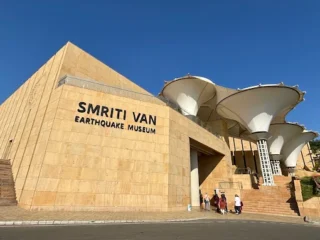
Smritivan Earthquake Memorial and Museum.
Smritivan Earthquake Memorial and Museum, located on Bhujiyo Hill in Bhuj, Gujarat, is a 470-acre tribute to the victims of the 2001 Kutch earthquake, inaugurated in 2022. It features seven interactive galleries, a 360-degree simulation, and a massive Miyawaki forest with 500,000+ trees, earning the 2024 Prix Versailles award for its design.
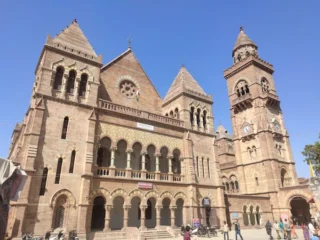
Aaina Mahal
Aaina Mahal, or the “Palace of Mirrors,” is an 18th-century, Indo-European style palace in Bhuj, Gujarat, built by Rao Lakhpatji and designed by craftsman Ram Singh Malam around 1750–1761. Located near Prag Mahal, it is famous for its, mirrors, Venetian glass, and fountains. It now functions as a museum displaying royal artifacts, including a 15-meter-long procession scroll.
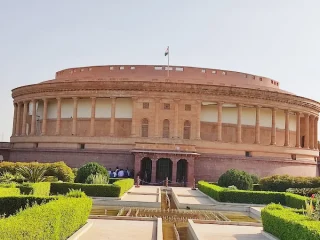
Vande Mataram Memorial
The Vande Mataram Memorial in Bhujodi, Gujarat, is a 12-acre complex dedicated to India’s freedom struggle, featuring immersive 4D experiences, replicas of historic sites like the Indian Parliament, and galleries showcasing key moments and figures from the independence movement using art, technology, and sound.
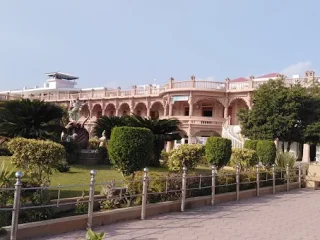
Bharatiya Sanskruti Darshan Museum
The Bharatiya Sanskruti Darshan Museum in Bhuj, Gujarat, is a cultural repository showcasing the rich folk arts, traditions, and daily life of the Kutch region and India through diverse artifacts like textiles, pottery, jewelry, paintings, musical instruments, and ethnographic displays, established by folk art expert Ramsinhji Rathod to preserve local heritage.
Sunset point
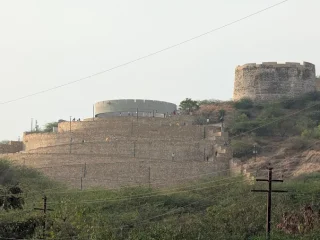
Sunset Point near Bhuj offers stunning panoramic views, with popular spots including Smritivan Sun Point (for city vistas and stargazing) and locations near Kalo Dungar (offering vast landscapes towards the Rann) or Jadura Hill (a charming, lesser-known spot), providing beautiful photo ops for memorable sunrises and sunsets over the Kutch region.
Chhatardi Bhuj
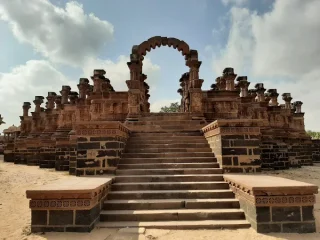
Chhatardi Bhuj refers to the ornate, umbrella-shaped royal cenotaphs (memorials) of the Jadeja Dynasty rulers of Kutch, built from red sandstone with intricate carvings, combining Rajput and Mughal styles. Located in quiet fields near Bhuj, these structures, meaning “umbrellas,” honor deceased royalty, with notable ones for Rao Lakha and Rao Rayadhan, offering a glimpse into Kutch’s heritage, though some were damaged in the 2001 earthquake.