About Bhuj
Welcome to Bhuj
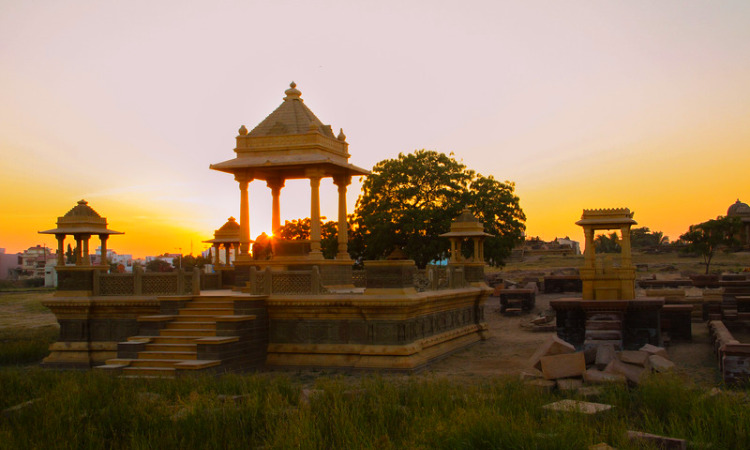
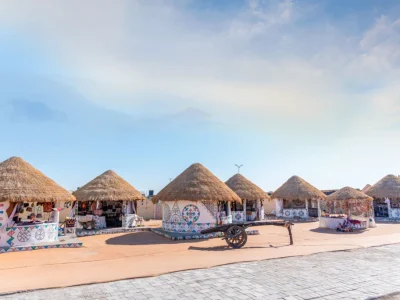
Bhuj is a historic and culturally rich city located in the Kutch district of Gujarat, India. Known as the heart of Kutch, it blends royal heritage, traditional crafts, and vibrant local life. The city is famous for landmarks like Aina Mahal, Prag Mahal, and the peaceful Hamirsar Lake, along with colorful markets and skilled artisans creating embroidery, bandhani textiles, and Rogan art. Surrounded by desert landscapes and close to the Great Rann of Kutch, Bhuj offers a unique mix of history, culture, architecture, and natural beauty, making it an important cultural and tourism hub of Gujarat.
Bhuj is a historic city in Gujarat, India, known for its vibrant culture, royal heritage, and artistic traditions. As the headquarters of the Kutch district, it is famous for landmarks like Aina Mahal, Prag Mahal, and the inspiring Smritivan Memorial Museum, which symbolizes hope and renewal after the 2001 earthquake. Surrounded by desert beauty, Bhuj serves as a gateway to the Great Rann of Kutch, colorful handicraft villages like Bhujodi, and the peaceful Hamirsar Lake at the city’s center.
Bhuj Overview
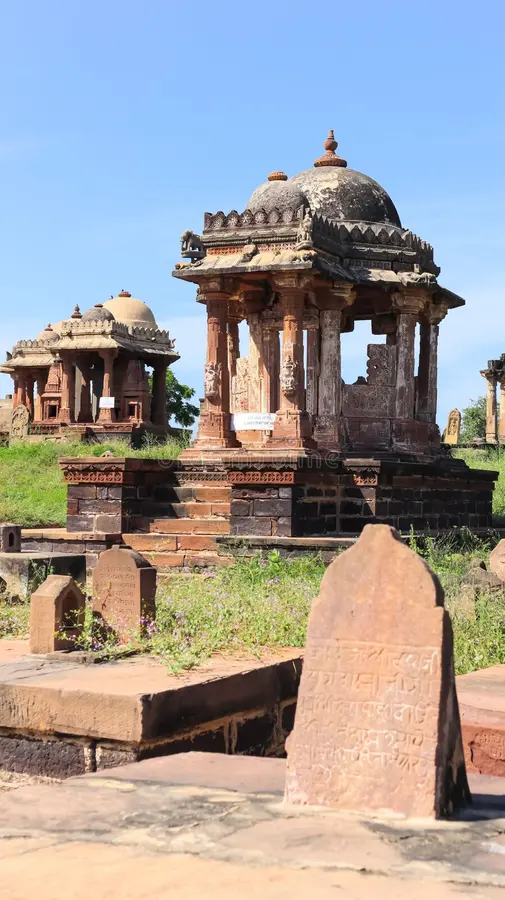
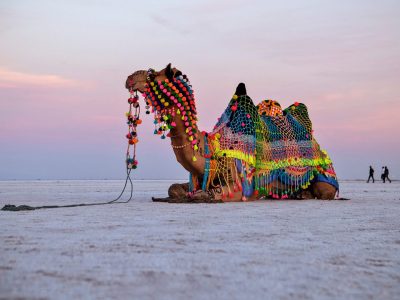
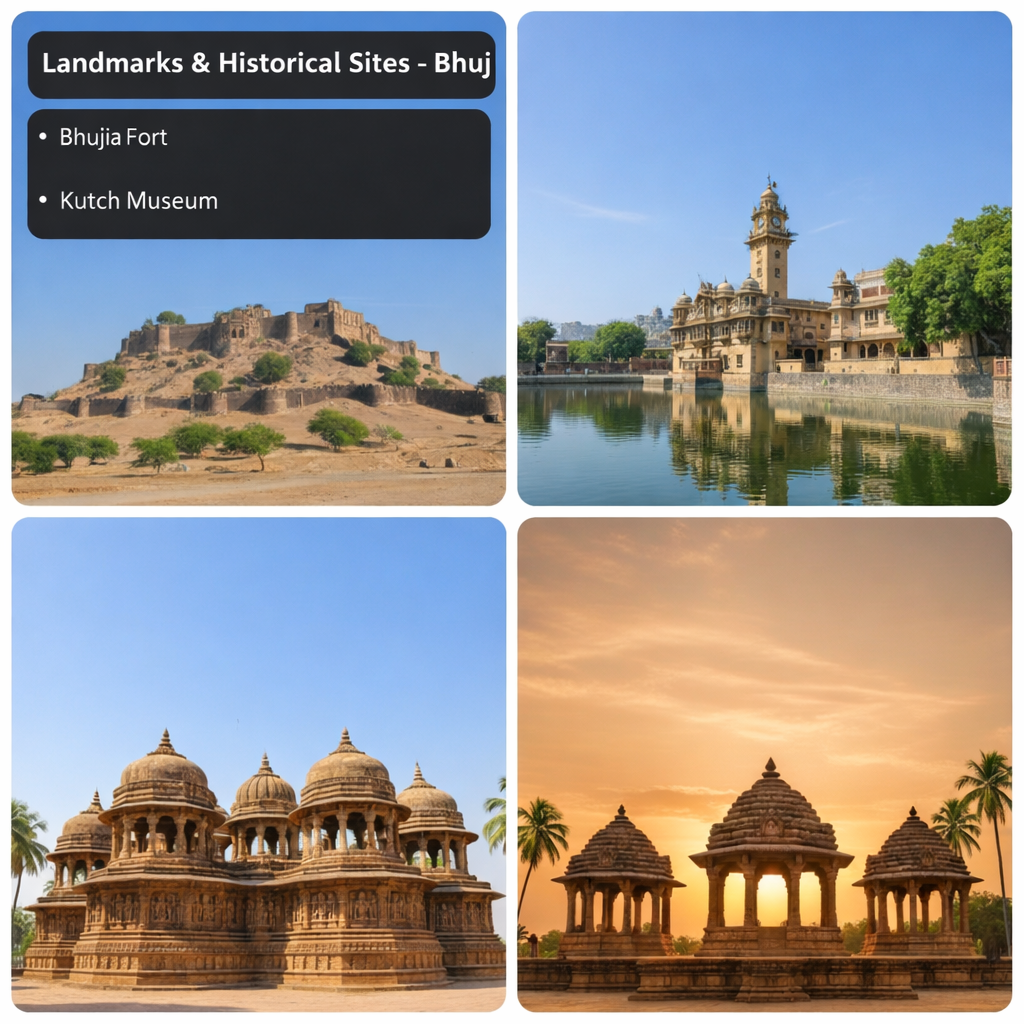
Bhuj is the historic capital of the Kutch district in Gujarat, India, known for its rich royal heritage, unique Indo-European architecture (like Aina Mahal, Prag Mahal), vibrant culture, and resilience, serving as a gateway to the Rann of Kutch. It blends ancient landmarks, like Hamirsar Lake and Kshatrapa engravings, with modern development, featuring textiles, handicrafts, and salt/ceramics industries, all set against the backdrop of Bhujia Hill.From 1590 onwards, when Rao was forced to acknowledge the Mughal supremacy, Bhuj came to be known as Suleiman Nagar amongst Muslims. The city’s walls were built by Rao Godji I in 1723, and the Bhujia Fort by Devkaran Seth in Rao Deshalji I’s time (1718 – 1741). Bhuj acts as a gateway to the Great Rann of Kutch, attracting visitors with its colorful festivals, handicrafts, textiles, and warm Kutchi hospitality.
Geography & Location
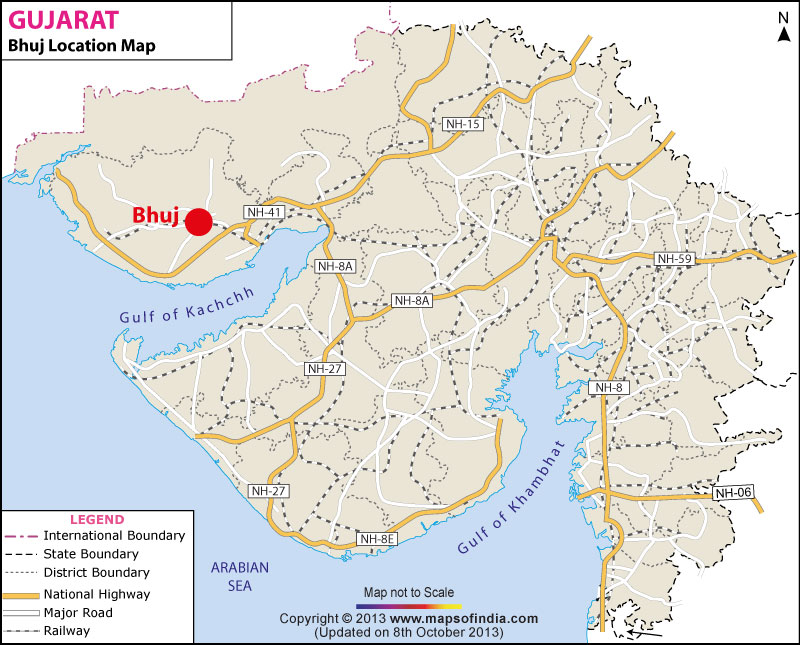
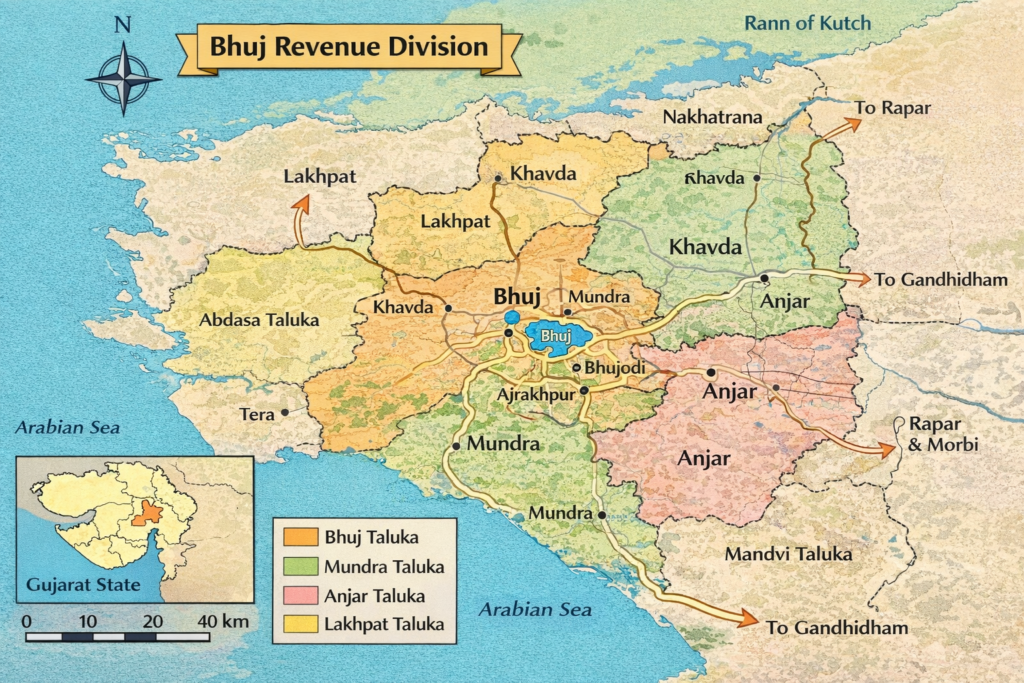
Bhuj (Kutch) District lies in the western part of Gujarat and is bordered by:
Rajasthan in the northeast
Banaskantha District in the east
Morbi District in the southeast
Surendranagar District in the south
The Arabian Sea to the southwest
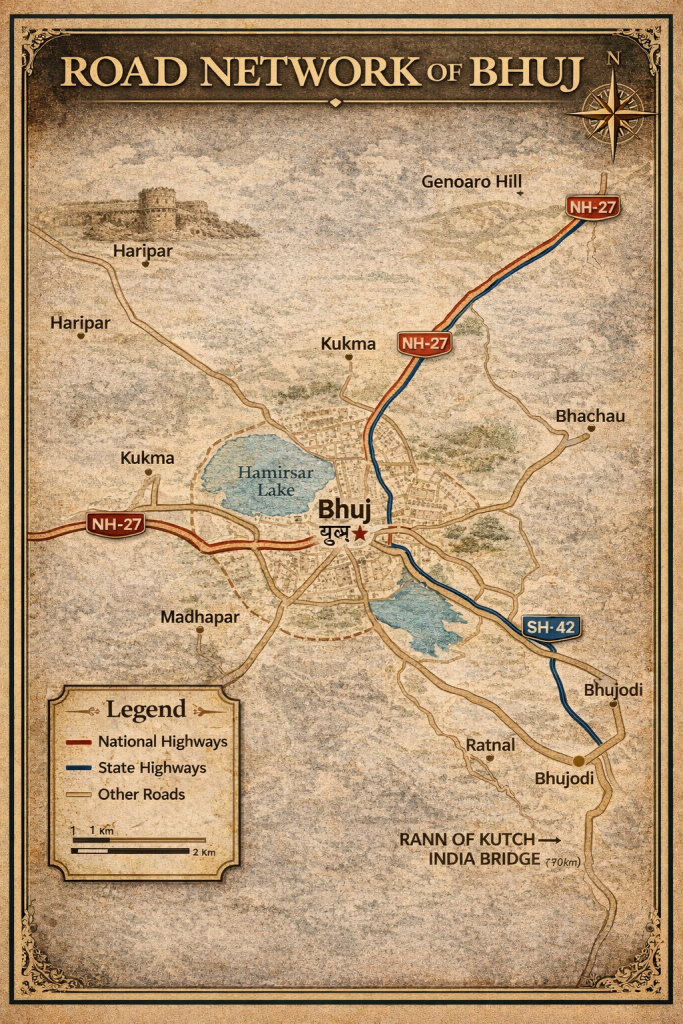
The district features a unique landscape of arid plains, salt deserts of the Rann, rocky hills, and growing urban centers. Supported by a steadily improving road and rail network, Bhuj serves as a key gateway to the Kutch region and remains one of the most accessible hubs in western Gujarat.”
History & Cultural Haritage
Bhuj, the historic city of the Kutch district in Gujarat, has a rich and vibrant heritage shaped by centuries of rulers, traders, and artisans. Founded in the early 16th century by Rao Hamir, Bhuj became the capital of the princely state of Kutch under the Jadeja dynasty. The city flourished as an important center of administration, trade, and culture, connecting India with regions of Central Asia, the Middle East, and Africa.
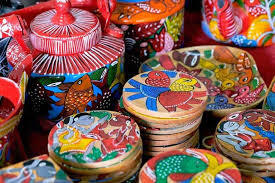
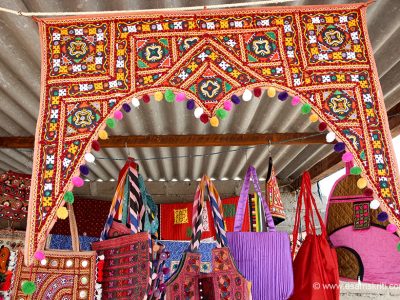
Bhuj is renowned for its unique cultural traditions, especially its world-famous Kutchi handicrafts. The region is celebrated for embroidery, bandhani (tie-and-dye), mirror work, leather crafts, wood carving, and metal art, passed down through generations. These crafts reflect the creativity and resilience of the local communities
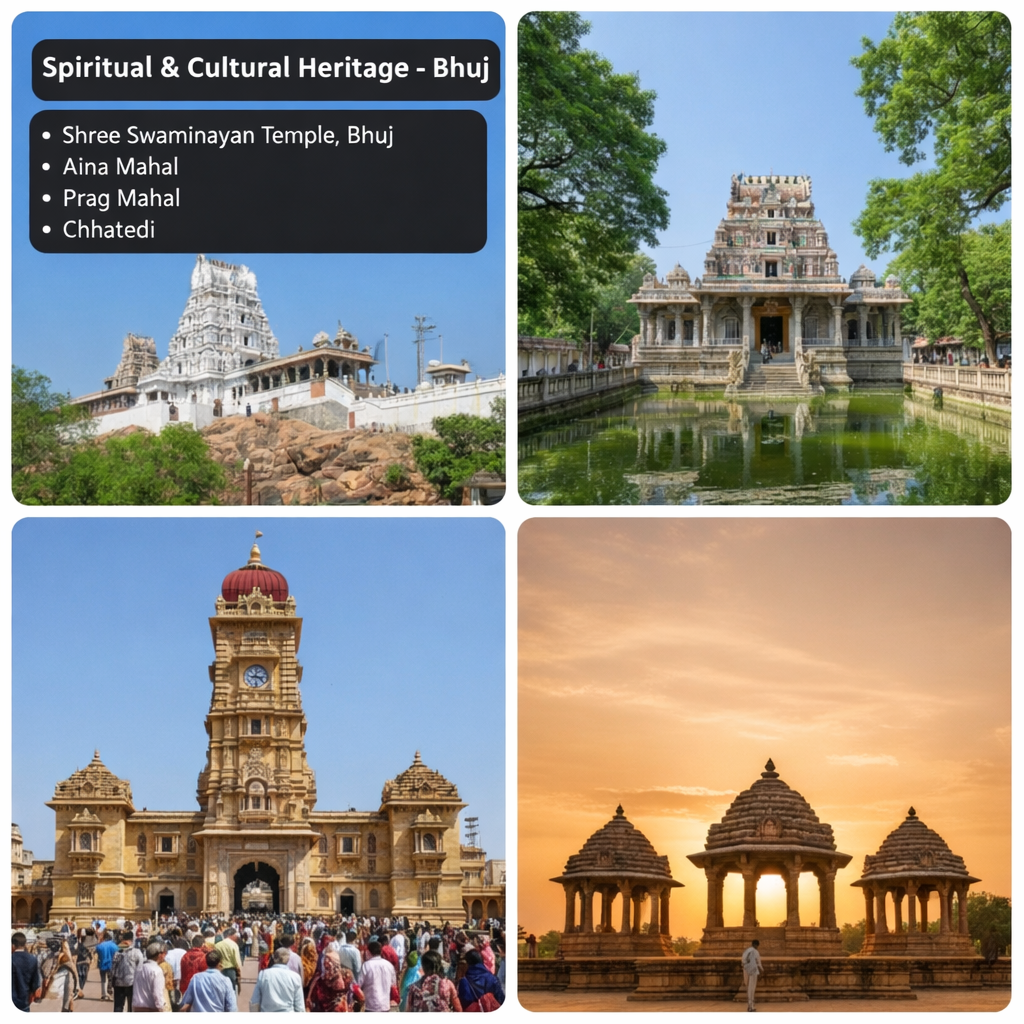
Bhuj is famous for its traditional woodcraft. Lacquer work, cast silver handicraft and terracotta pottery of Bhuj are also very famous and depict versatility of Arts and Crafts of Bhuj. Locals decorate their houses with mirrors, clay slip, mud and camel or cow dung.The city is also home to significant historical landmarks such as Aina Mahal, Prag Mahal, Hamirsar Lake, and ancient temples, which showcase a blend of Indian and European architectural styles. Festivals like Rann Utsav, Navratri, and Diwali are celebrated with great enthusiasm, highlighting the music, dance, folk art, and cuisine of Kutch.
Bhuj’s specialties lie in its rich Kutch handicrafts (textiles, embroidery, Rogan art, leatherwork) from villages like Bhujodi, historical architecture (Aina Mahal, Prag Mahal, Swaminarayan Temple, Vande Mataram Memorial), and proximity to the White Desert of Kutch (Rann of Kutch), offering unique desert experiences and wildlife, plus local street foods like Bateka Bhungra, making it a cultural and craft hub near natural wonders.

Agriculture-The backbone of Bhuj
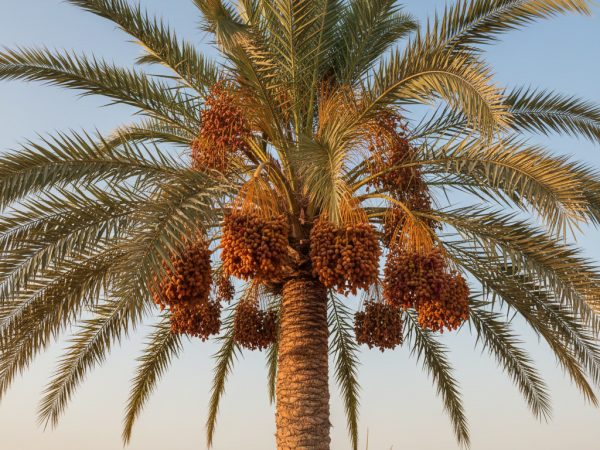
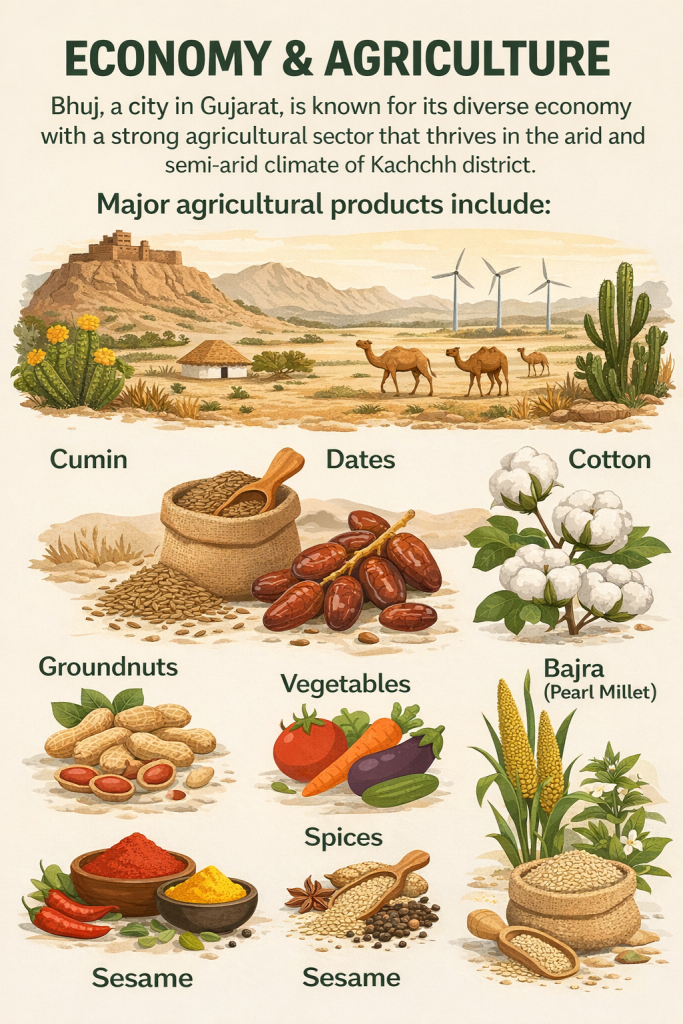
Agriculture is a vital part of Bhuj’s economy. The region lies in the semi-arid zone of the Kachchh district, where farming depends largely on monsoon rainfall, groundwater, and traditional water conservation methods. Despite challenging climatic conditions, farmers cultivate hardy crops suited to dry land agriculture, supported by improving irrigation facilities and modern farming practices.
Major crops includes:
Cotton – most important commercial crop
Groundnut (Peanut) – widely cultivated
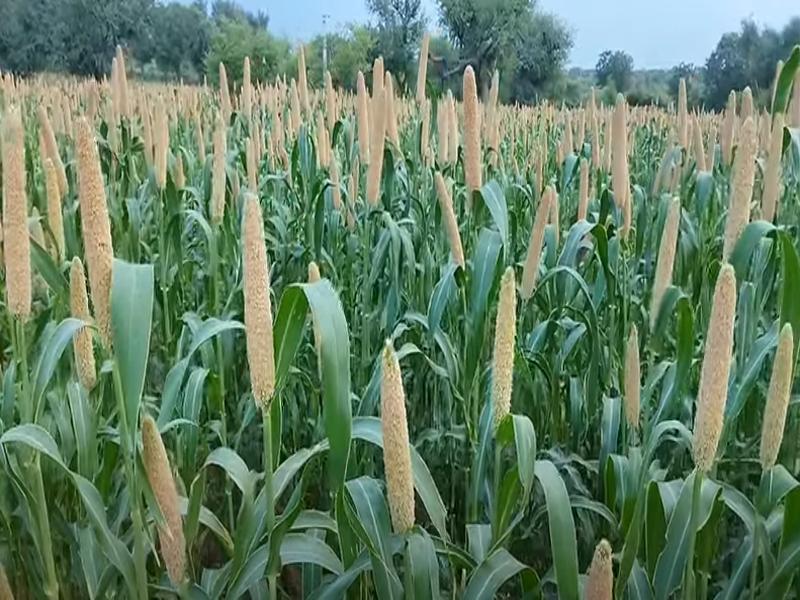
Bajra (Pearl Millet) – staple food crop
Jowar (Sorghum) – grown in rain-fed areas
Wheat – grown in limited irrigated areas
Castor – important oilseed crop
Sesame (Til) – traditional oilseed crop
Cumin (Jeera) – grown in some irrigated tracts
Economic Strengths of Bhuj
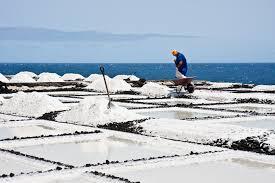
1.Salt Industry:
Salt production is one of the strongest pillars of Bhuj’s economy and a major contributor to the livelihood of the Kutch district. The vast Great manufacturing due to high salinity, intense sunlight, and low rainfall.
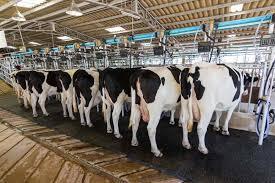
2.Dairy Production:
Dairy production is an important part of the rural economy of Bhuj in Kutch district, Gujarat. Despite the region’s arid climate, livestock rearing—especially buffalo and cattle—supports steady milk production and provides regular income to farmers.
3.Handicrafts:
Bhuj is one of India’s most renowned centers for traditional handicrafts, reflecting the rich cultural heritage of the Kutch region. The handicraft industry plays a major role in the local economy and provides livelihoods to thousands of skilled artisans.
4. Trade & Transport:
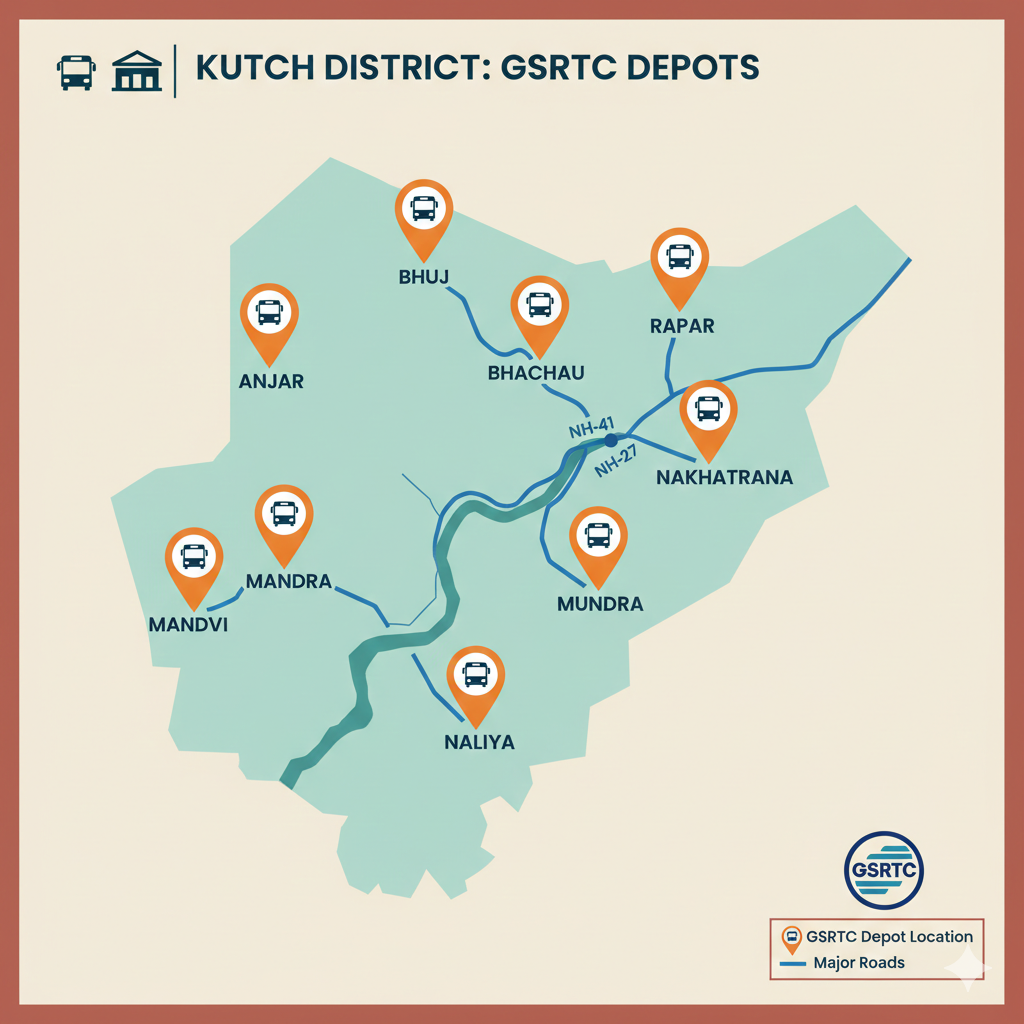
Bhuj is an important trade and transport hub of the Kutch district in Gujarat. As the district headquarters, it plays a key role in connecting rural areas, industrial zones, and coastal ports, supporting regional commerce and economic activitie
Culture & People-Bhuj
Bhuj, the cultural heart of the Kutch district in Gujarat, is known for its rich traditions, diverse communities, and vibrant lifestyle. The people of Bhuj are warm, resilient, and deeply connected to their customs, shaped by the region’s desert environment and historical influences. The population includes various communities such as Kutchi, Jadeja Rajput’s, Rahbaris, Ahirs, Harijans, Muslims, Jains, and trading communities, all living in harmony. Kutchi, Gujarati and Hindi are commonly spoken languages.
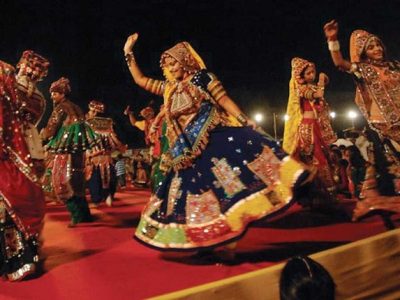
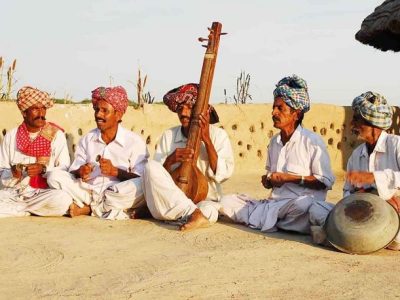
Bhuj is famous for its colorful folk culture, including Garba and Dandiya dances, Kutchi folk music, and traditional festivals like Rann Utsav, Navratri, Diwali, and Eid. People wear distinctive traditional attire—men often wear kediyu and pagdi, while women wear embroidered chaniya choli with mirror work. Food habits reflect the local climate, with dishes like bajra rotla, khichdi, kadhi, and dairy-based foods being popular. Arts, crafts, and community life play a central role in daily living.
Tourism & Attractions
Connectivity & Infrastructure
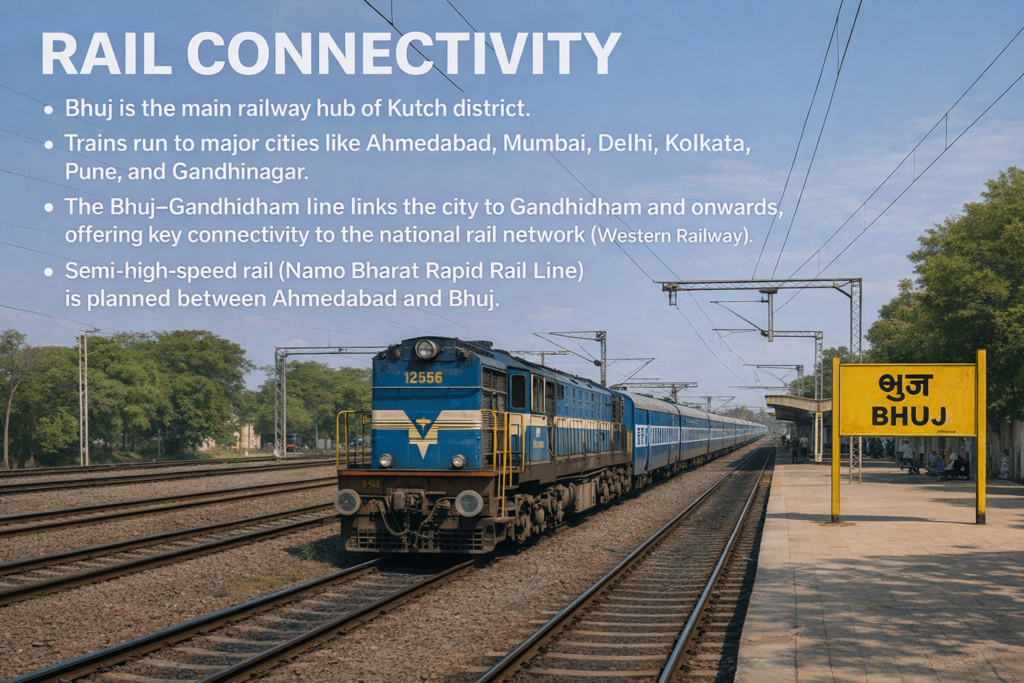
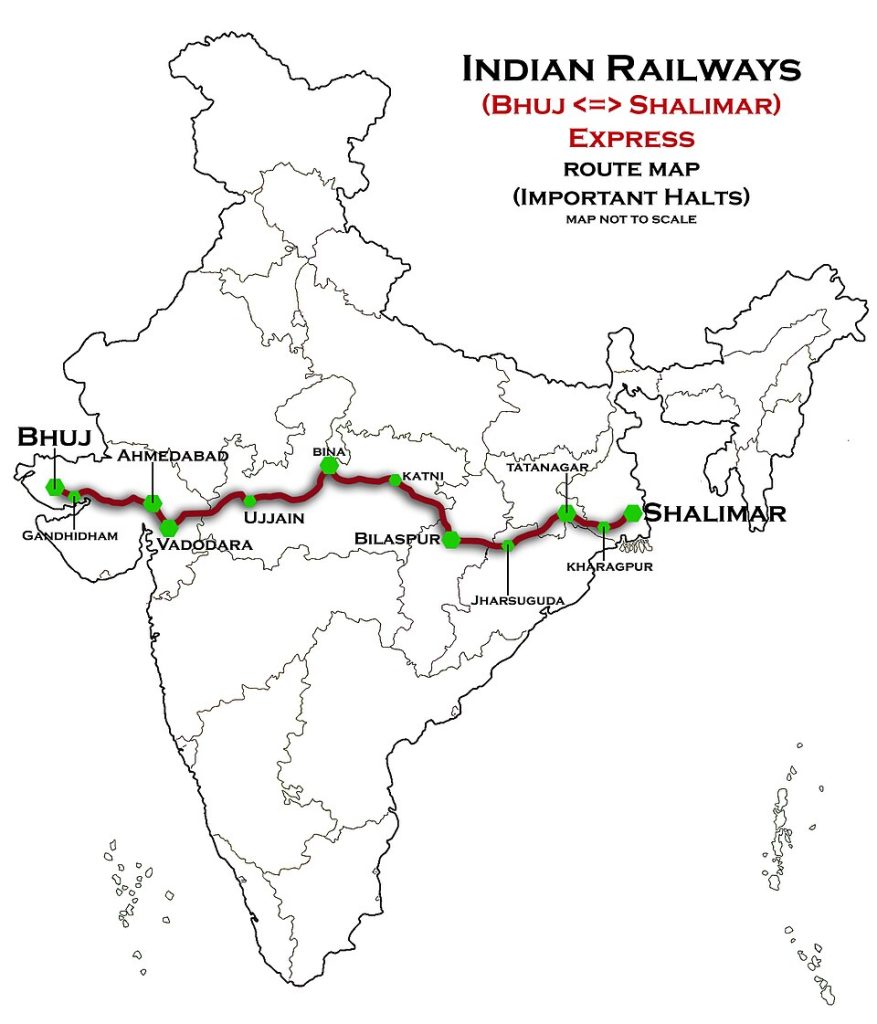
Rail Connectivity
Air Connectivity
Key Features of Air Connectivity
Domestic Network: Regular flights operate to major Indian cities including Gujarat, Mumbai, Delhi, Surath, and Tirupati, ensuring easy inter-state and intra-state travel.
International Reach: The airport has growing international connectivity through destinations like Singapore, Dubai, and transit routes that link passengers to global hubs.
Cargo & Export Support: Equipped with cargo handling units, the airport facilitates the export of agricultural produce, marine products, textiles, and industrial goods from Krishna District to global markets.
Modern Infrastructure: Features include an upgraded terminal, advanced navigation systems, parking facilities, lounges, and improved passenger services for a seamless travel experience.
Economic Impact: The airport boosts regional development by supporting tourism, trade, business investments, and fast accessibility to Bhuj,Mandvi, Gandidham and its surrounding places,towns.
Port Area-Bhuj
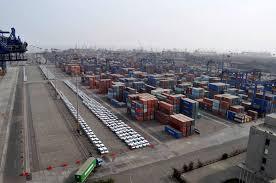
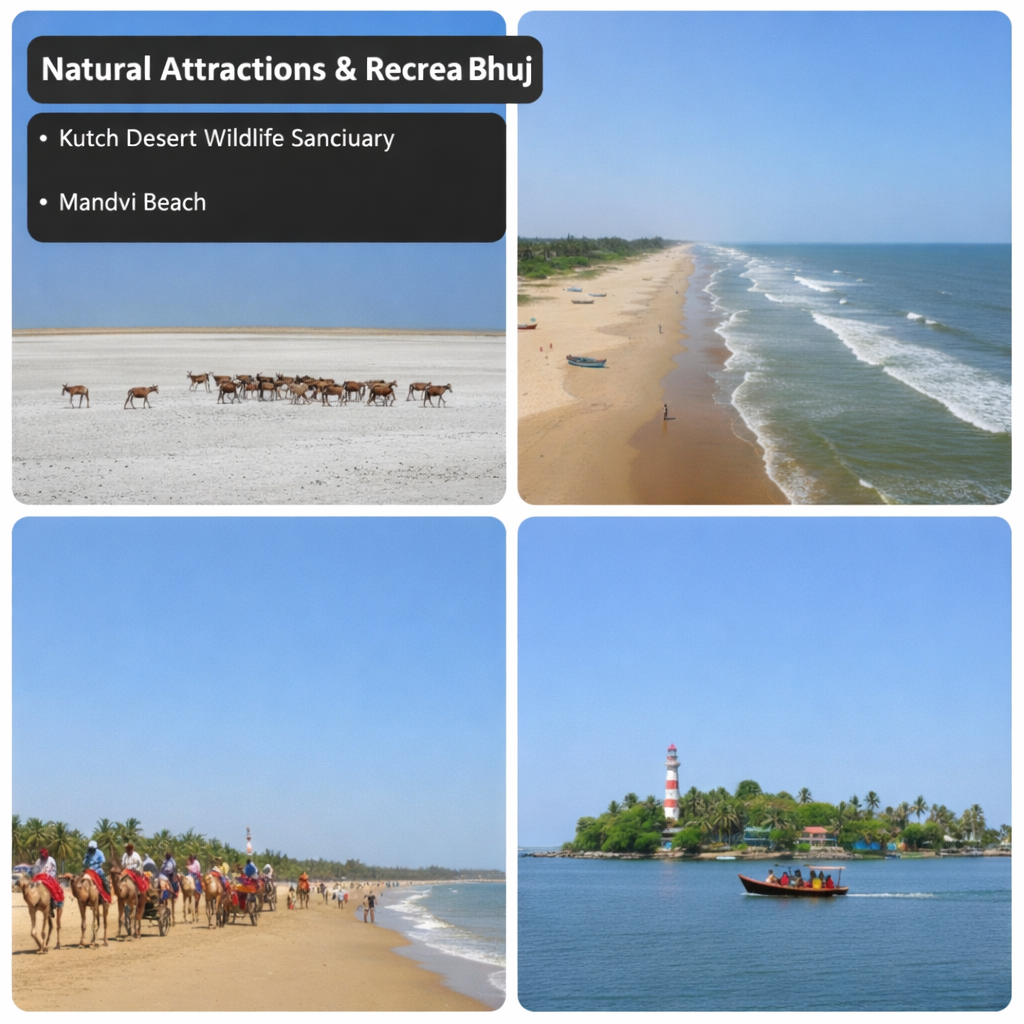
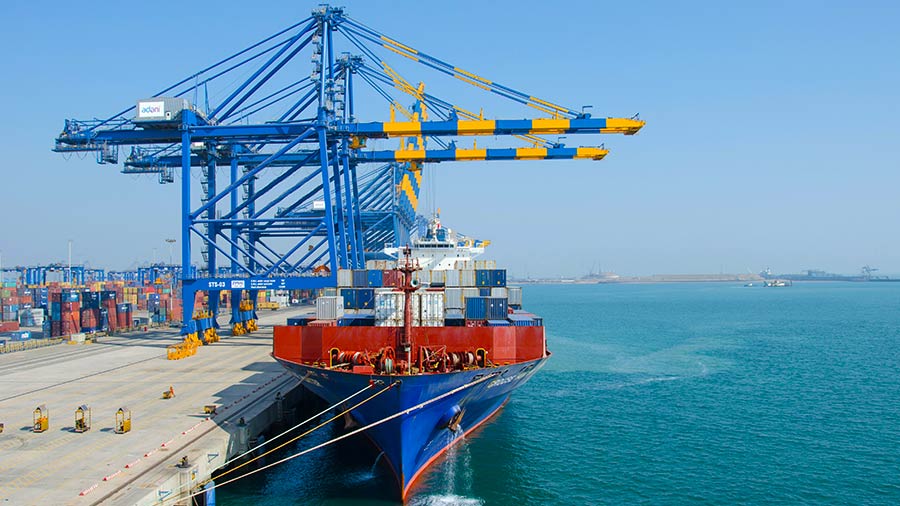
While there is no major commercial sea port directly in the city of Bhuj, the region is served by several important ports in the Kutch district, including the historic Mandvi Port (60 km away) and major industrial hubs like Mundra Port (approx. 60-70 km away). These ports facilitate significant maritime trade, with Mundra being India’s largest private commercial port.
A historic, fair-weather, lighterage intermediate port on the Rukmavathi river, known for traditional country craft construction. A premier, modern port operated by Adani Group, known for high-speed container handling, deep draught, and multi-commodity cargo.
A major seaport near Gandhidham, handling significant cargo on the west coast.A fair-weather port located on the Gulf of Kutch.
These ports, combined with the rail and national highway connectivity to Bhuj, make the region a vital logistics hub